The Ultimate Australian Guide to Oil-Based vs Water-Based Paint
Have you ever watched fresh paint peel off your front door just a few months after you painted it? It is a common and very frustrating sight. You spend your weekend working hard. You spend good money on supplies. Then, you watch the harsh Australian sun destroy your project.
Are you using the wrong paint for our tough climate?
Choosing the right paint will make or break your home renovation. The debate of Oil-Based vs Water-Based Paint has gone on for decades. Today, we will settle it. We will look at why the choice matters. We will explore what these paints are. We will show you exactly where to use them. Finally, we will teach you how to apply them like a pro.
1. What Are These Paints?
To make the right choice, you need to know what is actually inside the tin. Paint is made of three main things: a pigment for colour, a binder to help it stick, and a liquid carrier to keep it wet. That liquid carrier is the main difference between your two options.
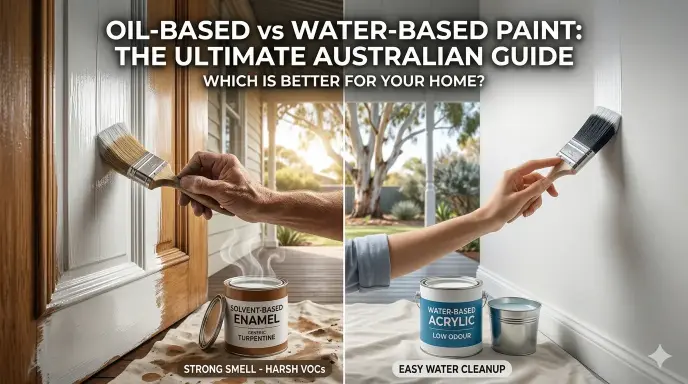
What is Oil-Based Paint? Oil-based paint uses a chemical solvent, like mineral turpentine, as its liquid carrier. When you brush it onto a door or trim, the solvent evaporates into the air. The colour and binder stay behind, drying into a very hard, tough shell.
What is Water-Based Paint? Water-based paint (often called acrylic paint) uses pure water as its carrier. As the water evaporates, the paint dries very quickly. It leaves behind a flexible, durable layer on your wall.
The Anatomy of a Paint Tin
Every tin of paint relies on three core ingredients:
1. Pigment
Provides the rich colour and coverage.
2. Binder
Acts as the "glue" to stick to your walls.
3. Liquid Carrier
The Deciding Factor. Keeps it wet until it's applied.
🛢️ Oil-Based Paint
Carrier: Chemical Solvent (e.g., Turpentine). Evaporates to leave a hard, rock-solid shell.
💧 Water-Based Paint
Carrier: Pure Water. Evaporates quickly to leave a durable, flexible layer.
2. Why the Australian Market is Changing
Health and the environment are huge topics in Australian home improvement right now.
When paint dries, it releases gases known as Volatile Organic Compounds (VOCs). These gases create that famous “new paint” smell, but they can also cause headaches and stinging eyes.
Fast Facts on Paint in Australia:
- Australia releases over 80,000 tonnes of VOCs into the air each year.
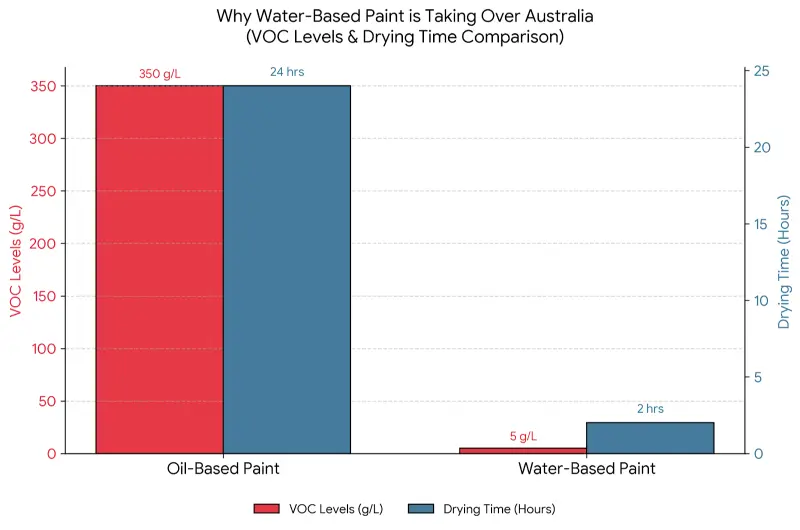
- A standard oil-based paint holds about 350 grams of VOCs per litre. That is almost half the tin!
- Modern water-based paints, like the DuluxenvirO2 range, contain almost zero VOCs.
Because of this, the Australian Paint Approval Scheme (APAS) is pushing for safer options. Better health and clean air are the main reasons water-based paint is taking over the market.
3. The Clear Pros and Cons
Let us look at the good and the bad so you can pick the perfect tool for your job.
The Pros of Oil-Based Paint
- Hard Finish: It dries like a rock and handles daily bumps and knocks.
- High Gloss: It provides a brilliant, smooth shine.
- Stain Blocking: It easily covers old water marks or timber stains.
The Cons of Oil-Based Paint
- Strong Smell: The harsh fumes mean you must keep windows wide open.
- Slow Drying: You usually have to wait 24 hours before adding a second coat.
- Fading Colour: White oil-based paint turns yellow over time, especially in dark hallways.
- Hard Cleanup: You need harsh chemicals to wash your brushes.
The Pros of Water-Based Paint
- Low Odour: It smells mild and is very safe for indoor use.
- Fast Drying: It dries in just two hours, letting you finish a room in one day.
- Colour Stays True: Crisp whites stay bright white forever.
- Flexible: It expands and contracts with your house during hot Australian summers, stopping cracks.
- Easy Cleanup: Just wash your brushes in the sink with warm, soapy water.
The Cons of Water-Based Paint
- Less Shine: The gloss finish is not quite as glassy as an oil base.
- Less Tough: It can chip a bit easier on high-traffic doors or skirting boards.
4. Real Use Cases for Australian Homes
Knowing the facts is good, but seeing real examples is better. Here is how our experts at Procover Painting handle real homes.
Best for Exterior Walls: Water-Based Paint Australia has extreme weather. We endure baking heat in January and heavy rain in July. This makes your house expand and shrink. Oil paint cracks under this stress, but premium acrylics like Dulux Weathershield or Haymes Solashield stretch with the weather and fight off harsh UV rays. Always use water-based paint outside.
Best for Doors and Trims: Water-Based Enamels Your front door and skirting boards take a beating from shoes, pets, and vacuum cleaners. In the past, we only used oil-based paint here. Today, technology has changed. Australian brands now make “water-based enamels” like Taubmans Water Based Enamel. They offer the tough shield of an oil paint, but they wash up easily with water and never turn yellow.
Best for Wet Areas: Specific Water-Based Paint Bathrooms get steamy and kitchens get greasy. Modern water-based paints feature special anti-mould technology. They allow your walls to breathe, stopping moisture from getting trapped inside the plaster.
| Area of the Home | Best Paint Choice | Why It Works Best in Australia | Top Product Match |
|---|---|---|---|
| Exterior Brick & Timber | Premium Water-Based Acrylic | Stretches with the harsh sun and heavy rain; won't crack. | Dulux Weathershield |
| Interior Walls & Ceilings | Standard Water-Based Acrylic | Low odour, zero yellowing, and dries fast for quick room makeovers. | Taubmans Endure |
| Doors, Skirting & Trims | Water-Based Enamel (Hybrid) | Tough against kicks and vacuums, but washes up easily with water. | Haymes Ultratrim |
| Bathrooms & Laundries | Water-Based Anti-Mould | Lets walls breathe and stops steam from trapping moisture. | Zinsser Perma-White |
| Metal Gates & Gutters | Oil-Based Enamel / Metal Prep | Grips bare metal tightly and blocks aggressive rust. | White Knight Rust Guard |
5. The “Metho Test”: Find Out What Is on Your Wall
Want to paint an old wall? You must know what is already there. Guessing usually leads to peeling paint. We use a simple trick called the Metho Test.
- Buy a bottle of Diggers Methylated Spirits from your local hardware store.
- Grab a clean, dark-coloured cloth.
- Pour a little bit of the spirits onto the cloth.
- Rub the wet cloth hard against your painted wall or door.
- Check the cloth.
Did the paint colour rub off onto your cloth? You have water-based paint. Did the paint stay on the wall? You have oil-based paint.
6. How to Paint Over Old Oil-Based Paint
This is the most common job we do. People want to get rid of old, yellowing gloss and replace it with fresh, white water-based paint.
You cannot paint water paint directly over oil paint. It will peel off like a bad sunburn because water and oil do not mix. You must follow these steps:
- Clean: Wash the surface with Selleys Sugar Soap and warm water to remove all grease. Let it dry.
- Sand: Oil paint is shiny. Take some medium sandpaper (120 grit) and lightly rub the area. You do not need to remove the paint; you just need to scratch the surface so the new paint can grip. Wipe away the dust.
- Prime: You must use a high-quality water-based prep coat, like Dulux 1 Step Prep. This acts like glue, sticking safely to the old oil paint and creating a base for your top coat.
- Paint: Apply two coats of your new water-based paint, waiting two hours in between.
| Step | Action Required | Recommended Tool/Product | Skip This Step? |
|---|---|---|---|
| 1. Clean | Scrub away all greasy handprints and dirt so the new primer can stick. | Selleys Sugar Soap | ❌ Never. Paint won't stick to grease. |
| 2. Scuff & Sand | Lightly rub the shiny oil paint to dull the surface and create "grip". | 120-Grit Sandpaper | ❌ Never. Water paint peels off shiny surfaces. |
| 3. Prime | Apply a high-adhesion bonding coat to bridge the gap between oil and water. | Dulux 1 Step Prep | ❌ Never. This is the "glue" that holds it all together. |
| 4. Top Coat | Apply two even coats of your new water-based enamel or acrylic. | High-Quality Synthetic Brush | ✅ Optional second coat, but highly recommended for durability. |
7. Why Trust Procover Painting?
The rules around clean air are getting stricter, and paint brands are spending millions to make water-based paints perform better than ever. In the next ten years, oil-based paints might vanish entirely. For 90% of your home today, water-based is the smart, safe choice.
Reading about paint is easy, but the actual work takes time, patience, and the right tools. If you skip the prep work or pick the wrong primer, the paint will fail.
You do not have to do it alone. At Procover Painting, we take the stress completely off your shoulders. As the top-rated painters Newcastle locals trust, we test your walls, supply premium Australian paints, handle the heavy sanding, and leave you with a flawless home.
Let Us Transform Your Home Today: Are you ready to refresh your space with a finish that survives the Australian climate? Stop stressing over paint tins. Connect with Procover Painting today. Call our friendly team or visit our website to get a free, no-obligation quote.