Owner, Procover Painting · 14+ years painting · NSW Licence #392662C · 9 min read
Key takeaways
- Use water-based acrylic for exterior walls, interior walls and ceilings, and most doors and trims.
- Solvent-based paint still helps on bare or heavily rusted steel and in some heavy stain-blocking jobs.
- Before you repaint, do the metho test. Use a white cloth so you can see the paint transfer.
- Home built before 1970? Treat old paint as lead paint until you know otherwise, and never dry sand it.
Quick answer
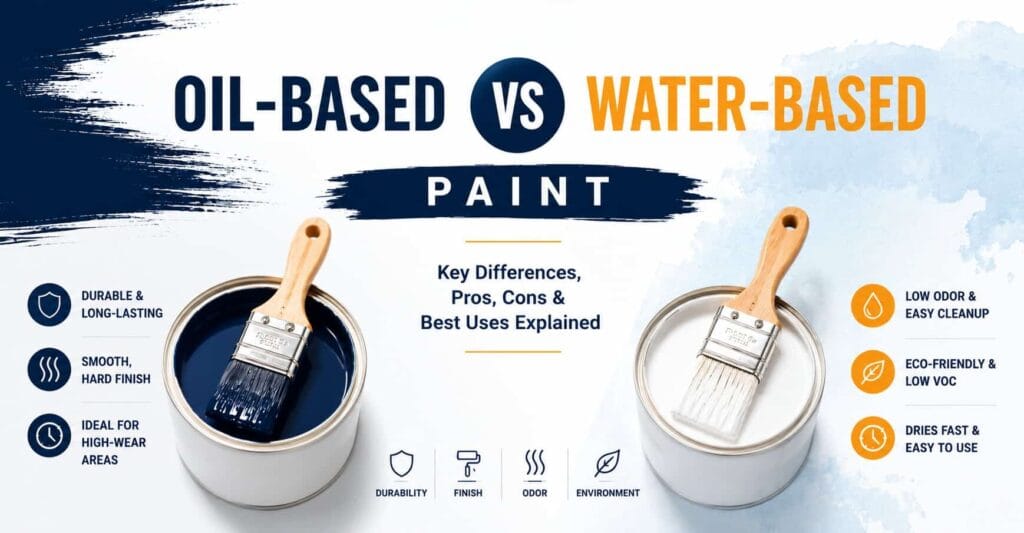
For most Australian homes, water-based paint is the better choice. It dries faster, stays flexible as the weather changes, doesn’t yellow the way oil paint can, and gives off far fewer VOCs (the fumes that give paint its smell).
Oil-based paint, also called solvent-based or alkyd, still has a place. Think bare or heavily rusted steel, tough stain blocking, and some heritage work. Modern water-based enamels now cover most doors and trims too.
What are oil-based and water-based paint?
Oil-based paint
The liquid carrier is a solvent, usually mineral turpentine or white spirit. You’ll also see it called solvent-based, alkyd or enamel paint.
The solvent evaporates and the paint hardens as it reacts with oxygen in the air. You get a hard, glossy film. The trade-offs are strong fumes, slow drying, solvent clean-up, and a tendency to yellow over time, mostly in rooms with little light.
Water-based paint
The liquid carrier is water. People call it acrylic or latex paint. As the water evaporates, the binder joins up into a flexible, durable film.
Modern water-based paint is a big step up from older acrylics. Premium exterior ranges are made for strong UV, rain and the salt air we get along the Newcastle and Central Coast shoreline.
Gives the colour and coverage.
The “glue” that holds the paint to the surface.
Keeps the paint wet. This is the main difference between the two.
Oil-based vs water-based paint at a glance
| Feature | Oil-based (solvent-based) | Water-based |
|---|---|---|
| Liquid carrier | Solvent, such as mineral turps | Water |
| Drying | Recoat often needs 16 to 24 hours | Touch dry in about 20 to 60 minutes. Recoat in about 2 hours for some exterior paints (at 25°C and 50% humidity) |
| Finish | Hard, glossy and smooth. Brush marks level out well | Satin to high gloss. Modern enamels are close to oil |
| Flexibility | Gets harder and more brittle as it ages. Can crack when timber or masonry moves | Stays flexible and moves with the surface |
| Yellowing | Tends to yellow with age, mostly in low light | Resists yellowing |
| Outdoors | Can chalk and turn brittle on large surfaces. Still used on some trims and metal | The standard choice for exterior walls and most fences |
| VOCs | Typically around 300 to 400 g/L | Low. Some premium ranges are under 1 g/L |
| Smell | Strong. Needs lots of fresh air | Mild. You should still ventilate |
| Clean-up | Mineral turps | Warm soapy water |
| Bare or rusty metal | Solvent-based primers are still common on heavily rusted or bare steel | Modern water-based metal enamels work on new or lightly rusted steel. Check the tin |
| Touch-ups | Harder to blend | Easier to blend |
Why most Australian paint is now water-based
When paint dries, it releases gases called volatile organic compounds, or VOCs. They cause that “new paint” smell. They can irritate your eyes, nose and throat and give you a headache, which is why fresh air matters when you paint inside.
Government emissions manuals describe most architectural paint sold in Australia as water-based. Solvent-based paint is still sold, and we’re not aware of any national ban. The shift has come from industry and customers, not a single rule.
APAS is a voluntary certification scheme for paints and coatings. It worked with the paint industry to set VOC limits for paints back in 1997. It also withdrew approval for products that contain lead and chromates.
Performance matters too. Outside, paint gets baked by the sun, soaked by rain, hit by salt air near the coast, and the walls expand and shrink every day. Flexible acrylic copes with that movement better than a hard, rigid film.
Pros and cons
Oil-based paint
The pros
- Hard finish. Stands up well to knocks on doors and trims.
- Deep gloss. Gives a shine that is hard to match.
- Stain blocking. Oil-based primers seal water stains, tannin bleed from timber and nicotine marks well.
- Levels out. The slow drying time lets brush marks flow out.
The cons
- Strong fumes. You need open windows and an empty room while it dries.
- Slow drying. A day between coats turns a weekend job into several days.
- Yellowing. White and light colours tend to yellow, mostly in dark rooms and hallways.
- Less flexible. It can crack as timber and masonry move.
- Messy clean-up. You need mineral turps for brushes and rollers.
Water-based paint
The pros
- Low odour. Easier to live with in an occupied home.
- Fast drying. You can often paint a whole room in a day.
- Stays white. Far less prone to yellowing than oil paint.
- Flexible. Moves with the surface through hot summers and cool nights.
- Made for UV. Exterior ranges are built for strong Australian sun.
- Low VOC. Better for your family, your painter and the environment.
- Easy clean-up. Warm soapy water does the job.
The cons
- A little less gloss. The gap to premium oil is closing every year.
- Can show lap marks. It dries fast, so you need to keep a wet edge. It takes some practice.
Which paint is best for each part of your home?
Premium water-based acrylic
Made for Australian sun, rain and salt air. It stretches with the wall instead of cracking. In our experience, a well-prepared water-based exterior coat on a weatherboard home can still look good after 10 to 12 years.
See our exterior painting service.
Water-based enamel
Doors, skirting boards and window frames get a hard life. Purpose-built water-based enamels (often called hybrid enamels) now give a tough, washable finish without the yellowing, fumes or solvent clean-up.
Water-based acrylic
Fast drying, low odour, no yellowing and easy to touch up. Two coats over a good primer gives a finish that lasts years.
Water-based, mould-resistant
Pick a paint made for wet areas with built-in mould resistance. Paint won’t fix a damp wall though. Sort out the moisture and ventilation first, and clean off any mould before you paint.
It depends on the condition of the metal
New or lightly rusted steel: a modern water-based metal enamel can go straight on. For example, White Knight Rust Guard Quick Dry Advanced Enamel is water-based, and its maker says new or lightly rusted steel needs no primer.
Heavily rusted, bare or non-ferrous metal: prime first. A solvent-based rust-inhibiting primer is still a common choice here. For fresh galvanised steel, use an etching primer before the topcoat.
Painting a Colorbond or metal fence? Read our fence painting guide and the Colorbond painting page.
The metho test: find out what is on your wall
Before you repaint, you need to know what is already there. Guessing is a common reason paint peels. This quick test tells you whether the old paint is water-based or oil-based.
- Grab a clean white cloth.Use white, not dark. A white cloth shows any paint that comes off.
- Add methylated spirits.Pour a small amount onto the cloth.
- Rub a hidden spot.Rub firmly for 10 to 15 seconds on a low, out-of-the-way patch, like the bottom of a door.
- Check the cloth and the paint.See what happened.
Built before 1970? Check for lead paint first
Lead paint was used in most Australian homes built before 1970. As a rule of thumb, lead in paint was limited to 1 per cent by 1970, but some newer homes still have older layers underneath. Lead is a risk when old paint flakes, or when you sand or scrape it.
- Never dry sand lead paint, and don’t use open-flame torches on it.
- If you do prep it yourself, wet scraping and wet sanding are the safest methods.
- If the paint is in good condition, it’s often safest to leave it alone or paint over it.
- For removal, use someone trained in safe lead paint work. Keep kids and pregnant women away from the work area.
Can you paint water-based over oil-based paint?
Yes, but only with the right prep. If you brush acrylic straight onto a shiny oil surface, it has nothing to grip. It can peel off in sheets. This is the process we follow for oil-to-water jobs.
- Clean.Scrub off grease, grime and handprints with sugar soap, then rinse and let it dry. Paint won’t stick to grease.
- Scuff sand.Lightly sand the gloss with 120-grit paper to dull it. If your home was built before 1970, wet sand only (see the lead warning above).
- Prime.Use a high-adhesion primer made for the job. Dulux 1Step Prep is a water-based option. Some primers say you can skip sanding. A light sand still gives the primer more to grip, and it’s the safer way to avoid peeling. Follow the tin.
- Topcoat.Apply two even coats of water-based enamel with a good synthetic brush. Allow the recoat time on the tin.
Primer is the step most DIYers skip. It’s the bridge between the old oil film and the new acrylic. Without it, you’re likely wasting time and money.
Common paint mistakes we see in Newcastle and the Hunter
Using the wrong paint outside
Interior paint outdoors fades and chalks quickly. Oil paint on big exterior surfaces tends to turn brittle with age. Choose a premium exterior acrylic with UV protection.
No primer over oil paint
Water-based paint straight over gloss oil is one of the most common reasons for peeling. It’s a callback waiting to happen.
Buying the cheapest paint
Cheaper paint often needs more coats and wears out sooner. A major Australian paint brand is usually better value over time.
Rushing the prep
Good paint can’t save a poorly prepared surface. Washing, filling cracks and sanding gloss decide how long the job lasts.
Skipping primer on repairs
Filler and fresh plaster are porous. They soak up paint and leave a dull patch, no matter how many coats you add.
Ignoring lead in older homes
Dry sanding old paint in a pre-1970 home spreads lead dust through the house. Test or assume, then prep wet.
Final verdict: which paint should you use?
For most of your home, use water-based paint. Modern acrylic and water-based enamels now match oil on hardness for most jobs, and they beat it on flexibility, yellowing, fumes and ease of use.
Water-based paint is the better choice for
- Exterior walls
- Interior walls and ceilings
- Doors, trims, skirting boards and architraves (use a water-based enamel)
- Bathrooms, kitchens and laundries (use a mould-resistant formula)
- Homes with kids, pets or people sensitive to fumes
Oil or solvent-based paint still makes sense for
- Priming bare or heavily rusted steel with a solvent-based rust-inhibiting primer
- Heavy stain blocking. Use an oil-based primer, then topcoat with acrylic
- Heritage work where you must match an original oil finish
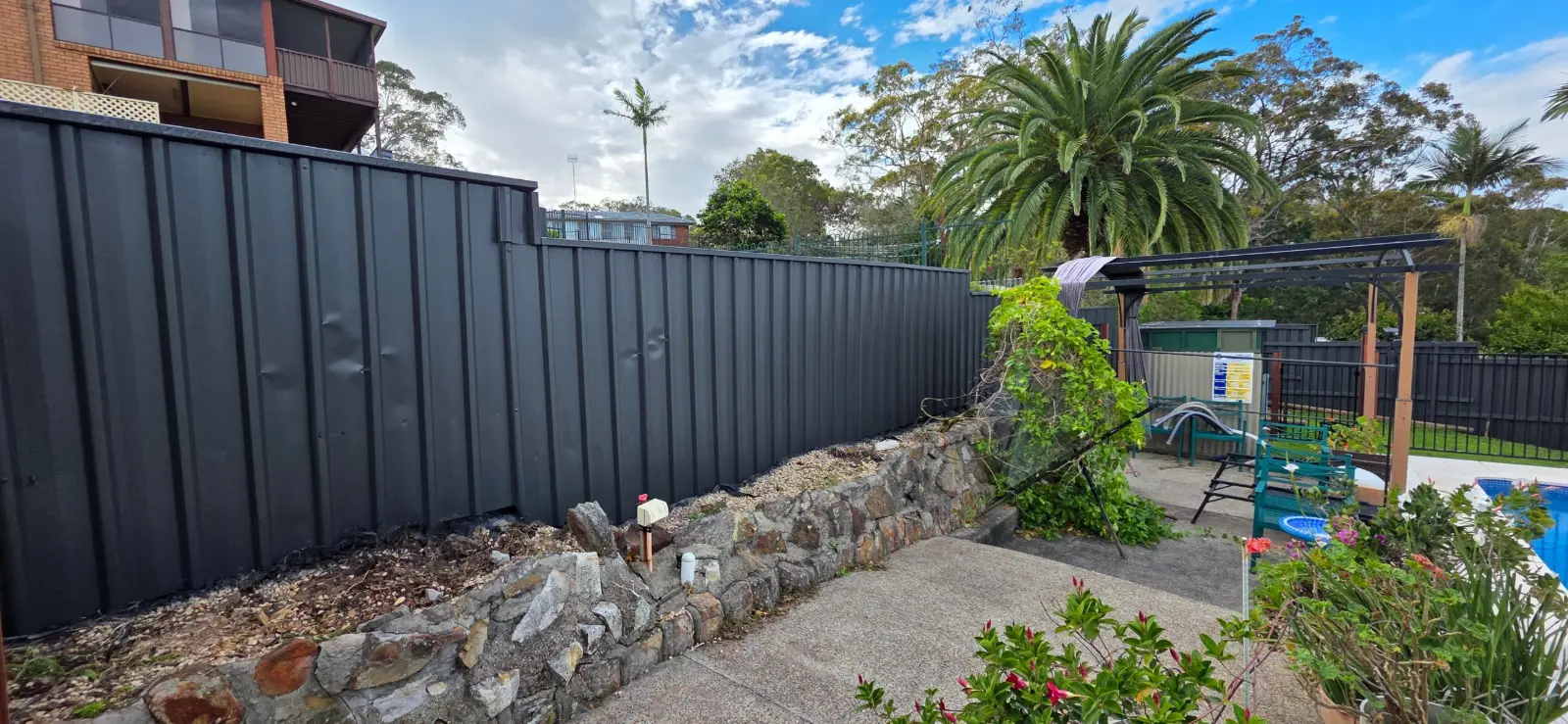
From our jobs: a peeling metal fence in Rothbury
This fence had green paint peeling off in patches. The last repaint hadn’t used a proper metal undercoat. We pressure washed it, applied a metal undercoat, then finished with two topcoats. It’s a good example of why prep and the right primer matter more than the brand on the tin.
What to do with leftover paint
Don’t pour paint down the drain or put it in your kerbside bin. Paintback is the national scheme for dropping off unwanted paint and empty paint tins, both water-based and solvent-based. It doesn’t take paint thinners, mineral turps or paint washings, so keep those separate. Check the Paintback site for your nearest drop-off point.
Too Easy – Get a Free Quote!
Tell us your painting needs and we’ll get back to you with a quick, free quote.
Frequently asked questions
For most jobs in Australian homes, yes. Water-based paint dries faster, stays flexible, resists yellowing, has fewer VOCs and is easier to clean up. Oil-based paint still helps on bare or heavily rusted steel and in some stain-blocking jobs.
Not on most exterior walls. Oil-based paint tends to chalk and turn brittle with age, and it can crack as the wall moves. Indoors, an oil enamel on trim can last many years, but it tends to yellow. A good water-based enamel lasts well without the yellowing.
In practice, yes. Acrylic is a type of binder used in water-based paint. Latex means much the same thing. Most shops use acrylic, latex and water-based to describe the same kind of paint.
We’re not aware of any national ban. Solvent-based paint is still sold. But most architectural paint sold here is water-based, and the industry has worked to lower VOC levels, including through APAS limits set in 1997. Always check the product label and your state’s rules.
It depends on the surface. Most use water-based acrylics on walls and ceilings, and water-based enamels on doors and trims. For metal, the choice depends on the condition of the steel and the primer system for the job.
Many water-based paints are touch dry in about 20 to 60 minutes. For example, Dulux lists Weathershield as touch dry in 20 minutes and recoatable after 2 hours at 25°C and 50% humidity. Cold or humid weather slows this down. Always follow the recoat time on the tin.
Yes, with prep. Clean the surface, lightly sand it, apply a high-adhesion primer, then topcoat. If your home was built before 1970, wet sand only and read the lead safety steps above first.
Take it to a Paintback drop-off point. Don’t pour it down the drain or put it in your bin. Paintback doesn’t accept thinners, mineral turps or paint washings.
Sources and further reading
- CSIRO, Australian Paint Approval Scheme (APAS), and its overview page (VOC limits set with industry in 1997).
- Dulux, EnvirO2 Interior Low Sheen (VOC under 1 g/L).
- Dulux, Weathershield Gloss (touch dry and recoat times).
- Dulux, 1Step Oil-Based Primer, Sealer & Undercoat (use under water-based or oil-based topcoat).
- Resene, VOC summary (example solvent-based enamel undercoat VOC levels).
- National Environment Protection Council, VOC content and sales volumes of coating products sold in Australia (study brief, 2008).
- Australian Government, National Pollutant Inventory: Paint and ink manufacturing.
- Australian Government, Lead Alert: the six step guide to painting your home (5th edition).
- NSW Government, LeadSmart: renovating and maintenance.
- Bunnings Workshop, methylated spirits test for oil vs water-based paint.
- Bunnings, White Knight Rust Guard Quick Dry Advanced Enamel (water-based metal enamel).
- Paintback, national paint and packaging recycling scheme.
Last reviewed 19 October 2026. Product details and figures were checked against manufacturer pages and government guidance listed above. Always read the product label before you start.