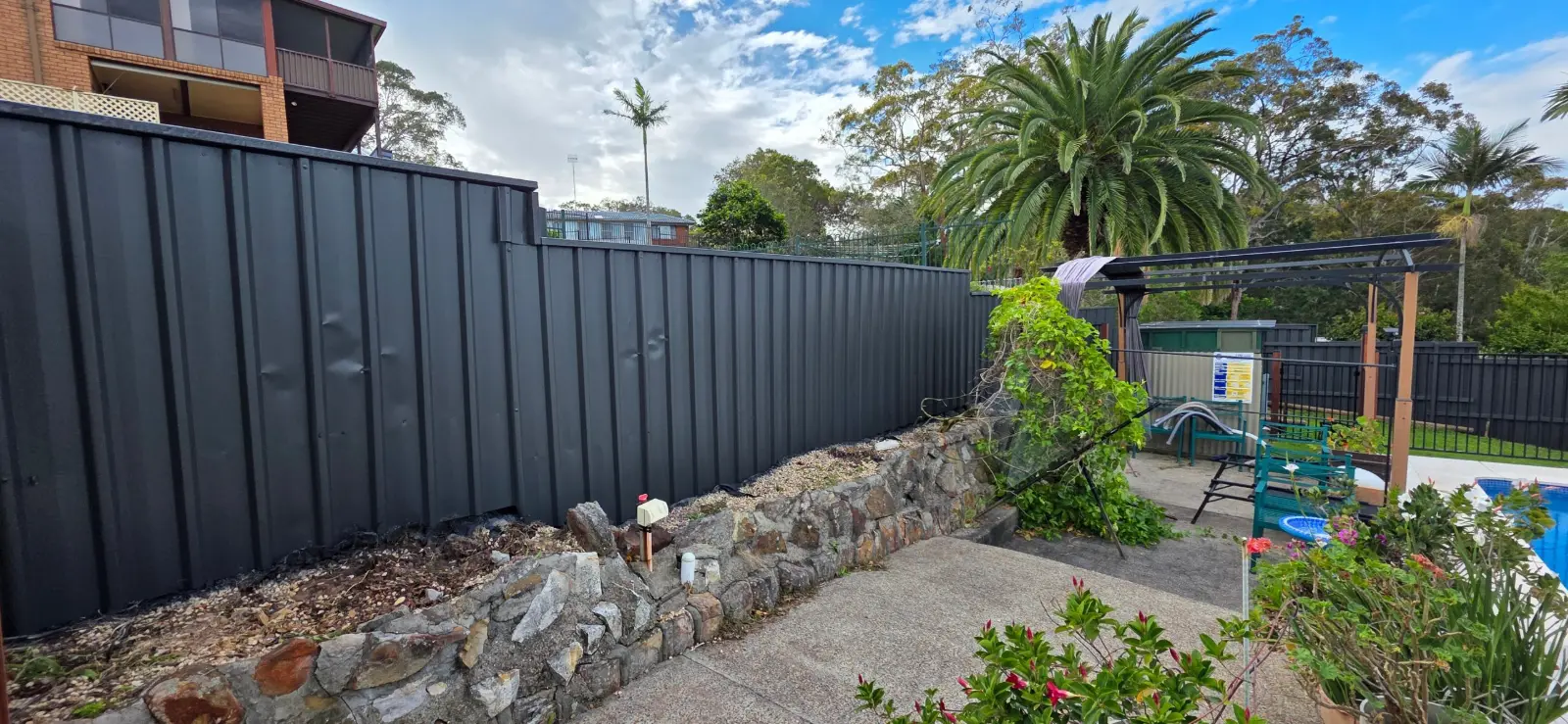

Quick answer: can you paint a Colorbond fence?
Updated October 2026 · By Harry Sandhu, Procover Painting
Yes, a suitable Colorbond fence can be repainted, but the right approach depends on its existing coating, exposed metal, corrosion and location. Start with an inspection and a complete primer-and-topcoat specification rather than choosing a colour and painting straight over the panels.
Before you begin: BlueScope states that painting the fence voids its warranty on the infill sheets, posts and rails. The repainted surface is not as durable as the original factory finish. Check BlueScope’s fencing FAQs before changing a new or warranted fence.
This guide covers preparation, paint selection and application for Newcastle and Hunter homes. For an inspection and quote, see our Colorbond painting service.
Should you repaint or replace the fence?
A colour change can make an older fence fit a new outdoor scheme. It cannot repair weakened posts, perforated sheets or a failing coating underneath. Check both sides, rails, fixings and the lower edges before deciding.
- Sound panels with an unwanted colour: assess repainting, including warranty consequences and future maintenance.
- Peeling previous repaint: establish why it failed and how much needs removing. A new coat only holds as well as the surface beneath it.
- Deep corrosion, holes or loose components: obtain a repair or replacement assessment before arranging painting.
- A new fence with minor scratches: check with the supplier first. BlueScope does not recommend touch-up paint on the factory finish because it weathers differently.
Repainting can improve appearance, but there is no dependable percentage increase in property value or fixed lifespan that applies to every fence.
Choosing paint and primer for a Colorbond fence
Specify the substrate and preparation, any primer, the exact topcoat and finish, coat count, drying conditions and application method. “Self-priming” does not mean suitable for every metal surface without further preparation.
Dulux Weathershield Low Sheen
Dulux lists Colorbond among suitable substrates, but says preparation depends on whether it is new or old, bare or painted, chalky or rusty. Its current instructions direct users to obtain advice for the particular condition. They separately specify two coats of PRECISION All Metal Primer on prepared steel and wrought iron; that instruction should not be treated as a blanket requirement for every intact factory-coated panel.
Use Dulux’s Low Sheen product instructions to confirm the complete system. Explain any coastal exposure when requesting advice.
Taubmans All Weather Exterior Low Sheen
The manufacturer’s sheet lists exterior steel and galvanised iron. For steel, it requires rust removal and a suitable Taubmans iron-and-steel primer or White Knight Rust Guard Metal Primer. Its Zincalume instruction specifies one coat of Taubmans 3 in 1 Prep; aged enamel systems also have a separate preparation requirement. These are different substrate instructions, not interchangeable recipes for Colorbond.
The sheet does not give a dedicated Colorbond preparation schedule. Ask Taubmans to confirm the system for your existing coating, damaged areas and exposure. Read the current product page and linked Low Sheen data sheet. For general wall-paint comparisons, see our exterior paint guide; metal fences need their own specification.
Colour and sheen: check a sample outdoors
Choose a colour that works with the house, paving and garden, then check a painted sample in sun and shade. Screen colours are only a guide. A colour match does not recreate the original factory coating or guarantee identical weathering.
Low sheen gives a quieter appearance; a higher sheen reflects more light and can make unevenness more noticeable. The available finishes depend on the selected product. Satin is not automatically the best choice for every fence: decide on the sample and the coating system, rather than assuming sheen alone determines durability.
Discuss the existing colour, proposed colour and any contrasting rails or posts with your painter before buying materials.

Tools and protection to plan before starting
- A soft nylon brush or broom, appropriate cleaner, fresh water and a way to collect residue.
- Preparation materials specified for the coating condition, plus tools for localised repairs.
- Masking tape, drop sheets and protection for paving, plants, windows and neighbouring property.
- The specified primer and topcoat, stirrer, brushes and a roller suited to the profile and paint instructions.
- Eye, hand and respiratory protection selected from the product safety data sheet and the work being undertaken.
A basic dust mask is not a universal substitute for the respiratory protection required for spraying. Follow the paint and equipment instructions. Plan access to both sides and discuss any shared-boundary work with the neighbour before setting up.
Preparing a Colorbond fence: a practical sequence
1. Inspect and choose the system
Identify whether the fence retains its factory coating or has already been repainted. Note powdery residue, peeling, glossy areas and corrosion. Check adhesion and complete a small test area using the selected supplier’s procedure before coating the whole fence.
2. Clean, rinse and dry
BlueScope’s Technical Bulletin TB-02 recommends detergent cleaning, a soft nylon brush, fresh-water rinsing and drying. Its preparation table distinguishes new Colorbond from uniformly weathered material. New surfaces need light keying with non-metallic scourer pads; do not use steel wool. Preserve the factory coating, particularly on bends.
Remove contamination rather than spreading it around. Pay attention to sheltered edges and rails. Keep soil, plant growth and retained moisture away from the lower fence. Follow the selected paint supplier’s cleaning requirements as well.
3. Deal with loose paint, exposed metal and rust
Remove unsound previous paint and feather its edges without unnecessarily cutting through sound surrounding coating. Exposed metal and corrosion need a compatible repair and primer system; a decorative acrylic topcoat is not a rust treatment. Where corrosion has weakened the sheet, rail or post, arrange repairs rather than trying to hide it with paint.
4. Prime wherever the specification requires it
Confirm whether the job calls for local priming or a full primer coat. Sound factory coating, bare steel and zinc-coated areas may require different treatment. Check primer/topcoat compatibility and the primer’s overcoating window. Avoid combining products from different suppliers without written compatibility advice.
5. Mask and protect the surroundings
Protect surfaces before priming or finishing. If spraying, assess wind, access, nearby cars and windows, plants and the neighbouring side. Choose brush and roller where overspray cannot be reliably contained.
Applying the finishing coats
- Check the drying window. Work within the selected product’s air and surface temperature limits. Allow for rain, evening dew and humidity; a sunny forecast does not guarantee a suitable metal temperature.
- Stir and prepare the paint. Follow the label for mixing, thinning and equipment settings. Do not use one spray recipe for every product.
- Coat edges and profiles evenly. Work methodically around posts, rails and panel ribs. Brush and roller suit smaller areas; spraying can suit longer runs where masking and conditions permit.
- Apply the specified film thickness and coat count. Do not stretch paint beyond the spreading rate. Let each coat reach its specified recoat condition before applying the next.
- Inspect before removing protection. Check for missed edges, thin areas, runs and overspray. Allow the coating to cure as directed before washing or handling it heavily.
For the named Taubmans Low Sheen product, the linked sheet specifies a minimum of two coats, application at 10–35°C and a two-hour recoat time at 25°C and 50% relative humidity. Colder or more humid conditions can extend drying. Use the instructions for your exact product rather than a universal “two hours and done” rule.
For scheduling locally, read our Newcastle exterior-painting timing guide.
Maintaining a repainted fence
After the coating has cured, follow its manufacturer’s cleaning instructions. Use gentle cleaning methods and check before using stronger chemicals or abrasive tools. Inspect sheltered areas, lower edges and fixings for retained dirt, moisture or emerging corrosion.
If a previous repaint chips or peels, investigate the cause and repair it using the compatible system. On an original factory finish, do not assume spot touch-up paint is the best remedy: follow BlueScope’s advice first. Different finishes may fade differently, so local repairs can remain visible.
Keep a record of the paint, finish, colour, primer and application date. This makes future maintenance and a later repaint easier to specify.
Procover Painting’s local fence work
Harry Sandhu’s work includes Colorbond fence painting and specialist spraying across Newcastle and surrounding areas. Our fence painting service and local project photos show the kind of work we undertake. A useful quote starts with the condition of your fence, access, masking and the preparation needed before the colour goes on.
Ask for a written scope naming the areas and sides included, repairs, primer and topcoat, coat count and protection of adjoining surfaces. Photos alone cannot establish which coating system was used or its long-term performance, so we do not present them as comparative paint tests.
Frequently asked questions
Can you paint directly over Colorbond?
Only when the chosen manufacturer’s instructions permit it on the assessed, prepared surface. Check the coating condition and primer requirements first; “self-priming” does not cover every situation.
Will painting affect the original warranty?
Yes. BlueScope states that overpainting voids its warranty on the fence sheets, posts and rails. Any repaint product or workmanship warranty is separate.
Can I paint a rusty fence?
Small affected areas may be repairable with the specified preparation and primer. Widespread or deep corrosion needs assessment; paint cannot restore lost metal or structural strength.
How much paint do I need?
Measure the area for each side being painted, include rails and posts, and allow for the corrugated profile and application losses. Multiply the area by the specified coat count and divide by the product’s coverage per litre. Primer is a separate calculation.
How much does Colorbond fence painting cost?
Length, height, one or both sides, access, coating failure, repairs and masking affect the quote. Compare the complete scope rather than a tin price or an unexplained rate per metre. Request a current quote for the inspected fence.
Is spraying better than brush and roller?
Spraying can give an even finish on profiles when the setup is suitable. Brush and roller can be more practical where space, wind or neighbouring property limit overspray control. Preparation and the correct system matter for both.
Planning a fence repaint in Newcastle or the Hunter? Contact Procover Painting for an assessment and quote.
Manufacturer information checked in October 2026: BlueScope fencing FAQs and TB-02 (August 2022, revision 14), Dulux Weathershield Low Sheen instructions, and Taubmans All Weather Exterior Low Sheen PDS v1.1 (31 July 2024), linked from the current product page. Follow the current label, data sheet and project-specific advice.